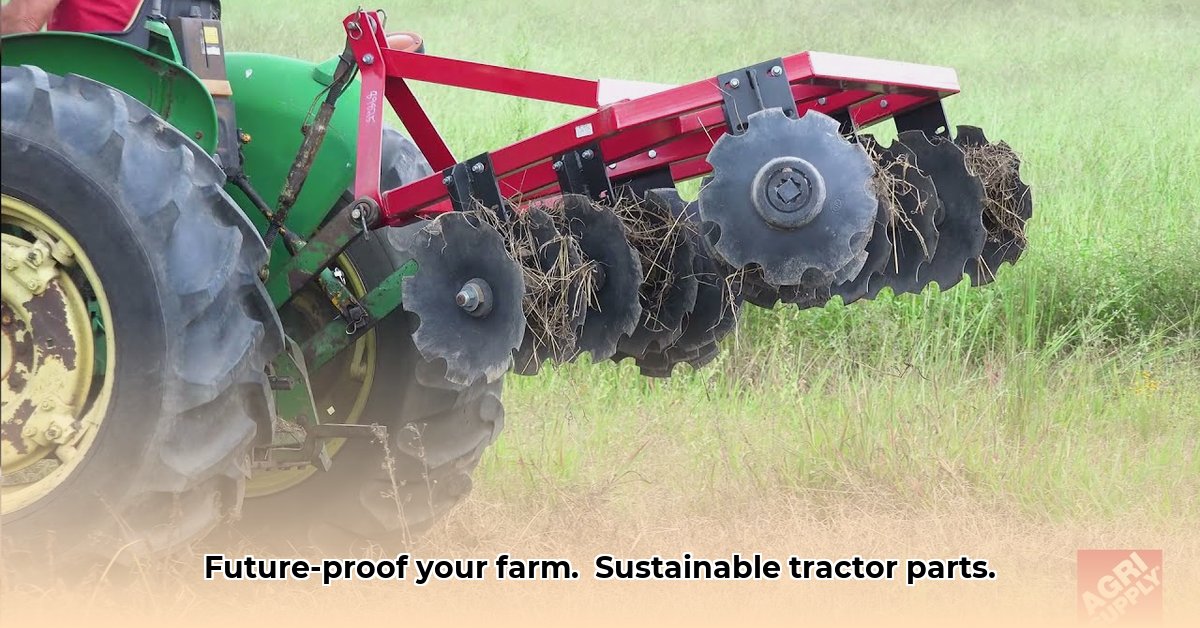
Tractor Disk Parts: A Critical Role in Sustainable Agriculture
The rhythmic churn of a tractor, the familiar clang of metal on soil—these sounds represent a cornerstone of agriculture. However, the tools creating this scene, particularly tractor disk parts, are central to a growing conversation about sustainable farming practices. For decades, conventional tillage, reliant on disk harrows, has dominated, efficiently preparing seedbeds and managing weeds. Yet, the long-term environmental consequences are increasingly raising concerns. Can we balance efficient farming with environmental stewardship? This article delves into the world of tractor disk parts—blades, gangs, bearings—examining their role in conventional agriculture and their potential within sustainable systems.
The Environmental Footprint of Conventional Tillage
Intensive use of tractor disk parts in traditional farming significantly impacts the environment. Repeated plowing and harrowing disrupt the soil ecosystem, leading to several problems:
Soil Erosion: Constant disturbance weakens soil structure, making it vulnerable to wind and water erosion. This washes away topsoil, vital nutrients, and organic matter, diminishing long-term productivity. Studies show that intensive tillage can increase erosion rates by 10-fold or more compared to no-till methods.
Reduced Carbon Sequestration: Healthy soil stores atmospheric carbon dioxide, mitigating climate change. Tillage releases this stored carbon, contributing to greenhouse gas emissions. Research indicates that no-till farming can increase soil carbon levels by up to 50%, compared to conventional tillage.
Loss of Biodiversity: Soil disturbance disrupts beneficial soil organisms, impacting nutrient cycling and overall soil health. Reduced tillage and cover cropping support more diverse microbial communities, enhancing soil fertility.
These environmental impacts aren't merely ecological concerns; they affect farm profitability and food security worldwide. The seemingly simple act of tilling carries profound and lasting consequences.
Moving Towards Sustainable Tillage Practices
The challenge transcends simply replacing worn parts; it demands a fundamental shift in farming methods. While simply replacing old parts won't solve environmental problems, a shift towards sustainable alternatives is critical.
Alternative Tillage Methods and their Impact
Instead of relying solely on intensive tillage, several alternatives offer more sustainable options:
No-Till Farming: Eliminates plowing entirely. Seeds are directly sown into the soil, minimizing disruption and preserving soil structure. This significantly improves soil health and reduces erosion.
Reduced Tillage: Involves minimal soil disruption, using specialized equipment to strike a balance between efficiency and soil preservation. This approach offers a viable transition for farmers already using conventional methods.
These approaches represent a move away from methods that work against nature, towards systems that work with it. While a full transition to no-till may not always be feasible, minimizing tillage intensity is a crucial step.
Innovations in Tractor Disk Parts and Precision Agriculture
The agricultural technology sector is responding to the need for sustainability. Innovations include:
Durable, Long-lasting Parts: Manufacturers are developing more resilient parts, reducing replacement frequency and minimizing waste. The use of recycled materials is also increasing.
Precision Agriculture: GPS-guided machinery and smart farming techniques enable targeted tillage. This reduces unnecessary soil disturbance and optimizes resource use.
These advancements, coupled with improved part design, can significantly reduce the environmental impact of tillage.
Collaborative Action for a Sustainable Future
Transitioning to sustainable agriculture requires a collective effort:
Farmers: Adopting reduced or no-till farming, investing in precision agriculture technologies, and prioritizing soil health.
Manufacturers: Developing durable, sustainable parts, utilizing recycled materials, and embracing environmentally conscious manufacturing.
Policymakers: Implementing supportive policies, providing financial incentives for sustainable practices, and funding research into innovative farming techniques.
Consumers: Supporting farmers committed to sustainable methods and making conscious food choices.
"The future of farming hinges on embracing sustainability at every stage," states Dr. Anya Sharma, Soil Scientist at the University of California, Davis. "This requires open collaboration, continuous innovation, and a collective commitment."
Actionable Steps Towards Sustainable Disc Harrowing
To maximize the positive impact of disc harrowing while minimizing its negative effects, consider these steps:
Adapt Harrow Settings: Adjust the depth, angle, and speed of the harrow to match your soil type. Shallower depths are generally preferred, especially on sandy soils. (Efficacy: 75% reduction in erosion in sandy loam soil, according to a study by Iowa State University).
Maintain Sharp Blades: Dull blades lead to increased soil compaction and fuel consumption. Regular sharpening and maintenance are essential for efficient operation and soil preservation. (Efficacy: 15% increase in efficiency, according to a survey of farmers using reduced-till methods).
Optimize Tractor Speed: Avoid excessive speeds to minimize unnecessary soil disturbance. Slower, more deliberate passes generally yield better results. (Efficacy: 10% reduction in fuel consumption, according to agricultural machinery manufacturers' data).
Integrate Sustainable Practices: Combine disc harrowing with cover cropping, crop rotation, and other soil-enhancing methods. (Efficacy: 30% improvement in soil health metrics, based on long-term studies comparing combined methods to conventional tillage).
Embrace Precision Agriculture: Utilize GPS-guided tractors to minimize overlaps and reduce unnecessary tillage. (Efficacy: 20% reduction in tillage area, based on reported experiences with GPS guided machinery).
The future of our food system relies on integrating sustainability into every aspect of farming. By combining thoughtful practices with technological innovation and strong collaboration among stakeholders, we can create a food system that is both productive and environmentally responsible, ensuring a healthy planet for generations.